Acupuncture - Prevention and Treatment Method
Acupuncture originates from India and China and it has been practiced for more than 10,000 years in treating the chronic affections. It was brought to Europe about the seventeenth century by the French. Throughout time it has proven one of the most efficient methods of disease prevention and treatment.
However, the latest archaeological discoveries have thrown a new light upon the origins of acupuncture because pieces of evidence found on the Romanian territory prove the existence and practice of acupuncture in the Carpathian-Danubian area. Male and female clay statuettes found here display small orifices in areas of the body corresponding to the acupuncture points described in traditional Chinese medical treatise.
The World Health Organisation acknowledged the benefits and healing qualities of acupuncture and admits that over 400 chronic affections are cured or treated by acupuncture.
Action
The traditional medicine embraces a holistic vision of the human body. The therapies employed treat the entire body and they do not deal merely with one of its organs or functions.
Each living organism in this Universe has a double character, being made up of energy and matter. The energy imbalances in the body appear as diseases in the material plan. Sickness of an organ causes a chain reaction in the human body, affecting the functions and the structure of the corresponding organs.
Acupuncture restores the energy balance and the harmony of the metabolic functions. The healing is achieved by treating and curing the internal and external causes which generated the disease in the first place.
Our body is crossed by 14 meridians along which are situated the acupuncture points. You may think at these points as control micro-centers through which the energy streams are guided.
The existence of the meridians and of the acupoints was scientifically proven by many elaborate studies of quantum medicine. By introducing contrast substances into the body and by monitoring its functions and activity, paths were detected that correspond to the energy meridians.
Chinese traditional medicine mentions 365 acupoints but in certain Tibetan treatises are described over 4000 energy points. Some of the points are situated outside the meridians. Their importance is much greater as they are in direct connection with the energy matrix of the body.
When a imbalance occurs, these points are deactivated, breaking the energy flow in the body and affecting the organ that corresponds to the meridian on which it is situated. Each affection blocks and shuts off certain points of energy. By stimulating these points, they become active again and the causes that generated the onset of the disease are eliminated.
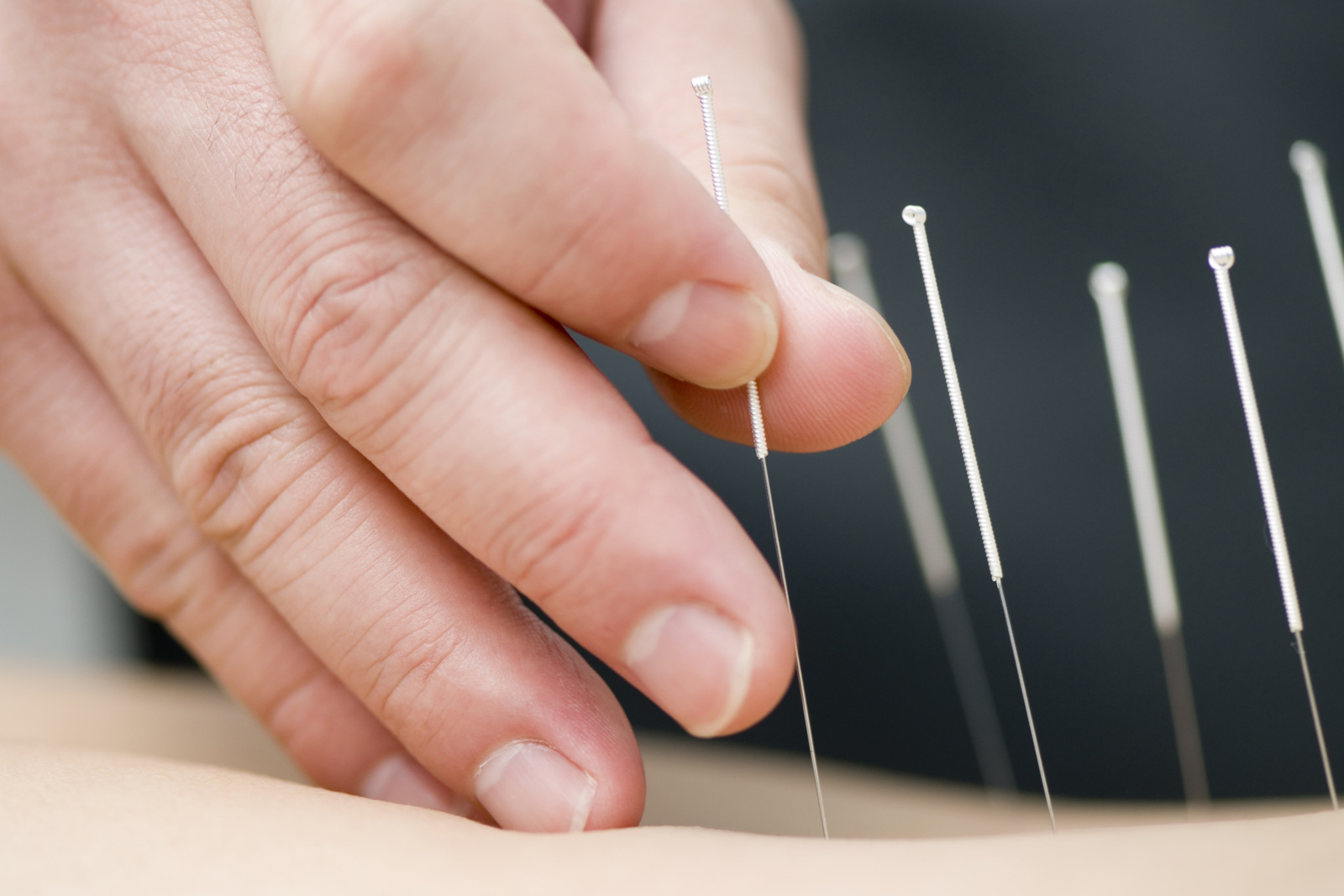
When the needle is inserted, the acupuncture point starts transferring a bidirectional informational stream: as energy to the affected organ and through the nervous system to the brain. After receiving the message sent by the acupuncture point, the brain "orders" the affected organ to start its healing process and provides the necessary resources to sustain that process.
The transfer of information takes place during the entire acupuncture session and it continues to the next session. Therefore, it is very important that the treatment should not be paused nor stopped, as the brain coordinates the healing processes according to the information received during the last acupuncture session.
Medical Consultation and Diagnosis
Any traditional medicinal treatment begins by establishing a diagnosis through specific methods: pulse interpretation, iris and tongue analysis, examination of patient’s physiognomy, examination of the reflexogenic areas. The classical analyses supplement the diagnosis and they highlight the energy imbalances of the body. Based on these data, the doctor establishes a diagnosis of the entire body as well as of the internal organs’ and of the general metabolism’s functioning capacity. Depending on these information, the treatment plan is drawn and it may include other therapies, too, beside acupuncture, in order to reduce the healing period.
The Acupuncture Session
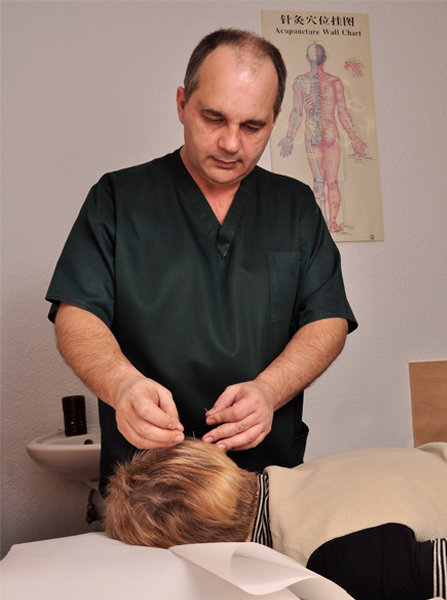
On the average, a session lasts about 11 minutes. Depending on the nature and the seriousness of an affection, its duration may be shortened or extended. Children have a better response to acupuncture treatment and for them the session lasts between 10 to 15 minutes.
Contrary to myths and rumors, acupuncture neither hurts nor can one fall ill from the needles. When the needles are inserted the patient feels a sensation similar to a mosquito prick, which may be deeper on the meridians where the energy blockage is stronger. The needles are either for single use or they may be sterilized before the acupuncture session for each patient in particular. The metals they are made from help maintaining their sterility.
There is no bleeding when the needles are taken out unless there is to much blood (to much matter ) that must be eliminated from the organ corresponding to the acupoint or to the meridian. In this case a few drops of blood appear on the skin when taking out the needle.
Treated Affections
Out of the experience of treating over 25,000 patients, I can say that acupuncture is recommended for almost every kind of chronic affections.
Here are some of the affections successfully treated by acupuncture: benign and malignant tumors, breast nodules, thyroid nodules, infertility, sexual dynamics disorders – impotence, erection disorders and frigidity, ovarian cysts, uterine fibroma, disorders of the menstrual cycle, endometriosis, false galactorrhea, prostate affections, renal calculus (stones and gravel), renal cysts, gastroesophageal reflux, ulcer, gastritis, enterocolitis, colitis, liver affections – hepatitis or early stages of cirrhosis, biliary calculus, type I and type II diabetes, pancreatitis, constipation, anal fissures, hemorrhoids, cardiopathy, cardiac arrhythmia, hypertension and hypotension, myocardial infarct, cardiac asthma, bronchial asthma, bronchitis, pneumonia, cerebral vascular accidents, benign medullary and cerebral tumors, stress, decreased immunity, anxiety, depression, migraines, insomnia, neuralgia, shingles, epilepsy, inter-cranial hypertension, endocrine disorders of the pituitary gland, thyroid gland and adrenals, obesity, discopathy, hernia, spondylosis, osteoporosis, rheumatism, coxarthrosis, vitiligo, psoriasis, pityriasis, verrucae, hirsutism, dermic allergies, allergic rhinitis, pharyngitis, laryngitis, sinusitis, otitis, snoring, apnea, anemia, thrombophlebitis, arteritis.
By acupuncture, very good results are also achieved in the field of beauty and cosmetics: treatment of wrinkles and aging signs, face lifting, breast invigoration, cellulite and stretch marks removal.
Another advantage of acupuncture is that it keeps and supports the health state of the body, thus preventing the onset of diseases.
|