Codrut Tutu MD Treated affections treated patients natural products Recommended literature Contact

AGING STOPPING PROCESS

Skin Rejuvenation, Tissue Invigoration and Complete Removal of Wrinkles

Flu Prevention by Fire, Acupuncture and Herbs

Endometrial Cancer

Multiple Sclerosis

Pulmonary Cancer

Cervical Cancer

Cerebellar Syndrome

Neurosis

Thyroid Cancer

Medullary Leasions

Acupuncture benefits during pregnancy

Neuralgia

Arterial Hypertension

Scoliosis

Scleroderma

Meniere Disease

Rheumatoid Arthrtitis

Hepatic Cirrhosis

Glomerulonephritis

Prostate Adenoma

Ankylosing Spondylitis

Lumbar Discopathy

Polycystic ovarian syndrome

Anemia

Chronic Pancreatitis

Cervical Spondilosis

Biliary Dyskinesia

Cardiomyopathy

Hepatitis

Depression

Thrombophlebitis

Psoriazis

Uterine Fibroma

Cerebral Atrophy

Why do Chronic Affections Appear?

Curing the Peptic Ulcer

Healing Cancer by Traditional Medicine Therapies

Acupuncture - Prevention and Treatment Method

Osteoporosis

Leukemia

Vitiligo is healed by acupuncture and apiphytotherapy

Bronchial Asthma

Diabetes

Cerebrovascular Accident  (Stroke)

Insomnia

Infertility

Obesity

Endometriosis

Face Lifting by Acupuncture and Apiphytotherapy

Panic Attacks

Acupuncture and Apiphytotherapy - Remedies for Breast Tumors

Treatment of Pituitary Adenoma by Traditional Medicine Therapies

acupunctura romana acupunctura engleza

Multiple Sclerosis

A disease of the central nervous system, multiple sclerosis is defined by a nerve structures’ demyelination process, respectively by a corrosion of the phospho-lipido-proteic sheath covering the nerve fibers. As location, demyelination affects especially the brain, the bone marrow and the optic nerves. From the physiological point of view, this degradation of the nervous system breaks the circulation of the nerve impulses. It is betrayed by neuro-motor and cognitive deficiencies: balance disorders, disorders of the sense organs (especially vision disorders), movement control disorders, general hypotonia (diminished muscle tone), memory and concentration disorders, depression, anxiety, etc.

The manifestations of multiple sclerosis reveal a different pattern for each patient, depending on the place and on the affected nerve area. The degenerative process has two complex manifestations: in early stages it is characterized especially by the inflammation of the myelin sheath and a mild neuro-degeneration. In severe stages, the neuro-degeneration process increases and the intensity of the inflammations decreases. At the onset, there can be noticed especially:

  • neuro-motor deficiencies: muscle stiffness, dragging leg, weakness when moving the limbs, ataxia, difficulty in handling the objects and tendency to drop the objects
  • sensorial manifestations: numbness, tingles, stinging, electric impulses in the backbone area and towards the lower limbs
  • miction disorders: urinary incontinence or loss of miction sensation
  • vision disorders: sudden loss of eyesight and eye pains (optic neuritis), blurred vision, stained vision, darkened, unclear vision, double vision
  • vestibular disorders: balance disorders, vertigo, dizziness

As the degenerative process advances, more complex manifestations become obvious, such as:

  • digestive disorders: slow intestinal transit, constipation, etc
  • urinary and defecation disorders: urinary retention or incontinence, infections of the urinary tract
  • impotence in men
  • sexual dysfunctions and frigidity in women
  • cognitive disorders: memory loss, difficulties in actualization of the necessary information, of the words and of the usual concepts, concentration difficulties
  • emotional disorders: oscillating emotional states, emotional turbulence episodes, depression, anxiety, obsession or – on the contrary – euphoric states, ecstasy and exacerbated joy
  • exacerbation of pains and of the sensorial manifestations
  • exacerbated neuro-motor deficiencies
  • blindness

Depending on the frequency and the amplitude of these manifestations, there are four major forms in the evolution of multiple sclerosis:

  • recurrent-remissive: it is characterized by sudden attacks, that may cause permanent lesions to the nervous system, attacks that are followed by remission periods, when the disease does not advance
  • secondary-progressive: the onset is accompanied by symptoms that are specific to the recurrent-remissive multiple sclerosis, followed by the continuation of the degenerative process without remission periods
  • primary-progressive: continuous degenerative process, no attacks
  • recurrent-progressive: progressive degeneration from the onset, accompanied by periodical attacks

Many patients with multiple sclerosis do not fit exactly in these patterns. The multiple sclerosis is characterized by oscillating symptoms and a slow evolution that spans over many years. There is a higher incidence in men, especially in the middle-aged ones.

In the remission episodes, the patient seems cured. As the degenerative process increases, the symptoms become more pronounced. At the same time, during the remission periods there still persist one or several symptoms. The nervous system loses its capacity to recover itself after the relapse periods, the disease gradually acquiring a permanent character.

There are rare instances of death from multiple sclerosis in the first years from the debut.  In these cases it is a particular form, called the malignant or fulminant sclerosis.

Causes

The demyelination process is triggered by the action of highly infectious pathogen factors, by highly stressful events, by physical or psychical traumas. In the evolution of the disease, these factors may become also causes of the relapse episodes. For these factors to affect the structure of the central nervous system, there must be certain conditions. In this particular situation it is a poor oxygenation of certain cerebral areas, by an oxygen deficit of approximately 50%. The lack of cellular oxygenation will cause serious immune deficiencies, which will allow the corrosion of the myelin sheath.  Certain dysfunctions of the hemato-encephalic barrier account for the decrease of the oxygenation level and the penetration of the pathogen agents to cerebral level.

Treatment

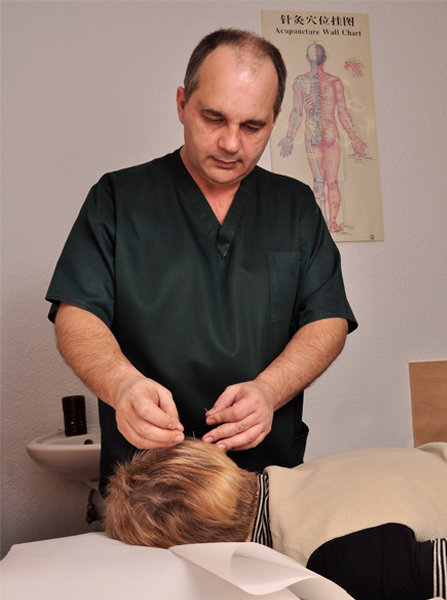
Therefore, in order to treat multiple sclerosis, there must be restored the optimum oxygenation level in the affected areas in the first place. That is done by treating the dysfunctions of the hemato-encephalic barrier. By increasing the oxygen supply, the cellular functions and the metabolic exchanges are restored within normal parameters, which will improve the local immunity. If the stage of the disease allows it and if there are not severe lesions, the cerebral areas and the demyelinized  nervous branches will be regenerated, too. Where the corrosion of the myelin sheath is too pronounced, the functions of the respective area will be transferred to a healthy area of the nervous system. The reconstruction and relocation procedure is done especially by the combination of certain medicinal herbs with regenerating, revitalizing, tonification and antiinflammatory effects. The oxygenation is restored by specific acupuncture techniques, techniques that also contribute to the diminishing of the symptoms to their complete disappearance. Where the sclerosis process also affected areas controlling the activity of certain organs, thus impairing their activity, there will be stimulated certain energy centers on the body in order to cure them.


multiple sclerosis, multiple sclerosis treatment, treatment for multiple sclerosis, multiple sclerosis acupuncture, acupuncture for multiple sclerosis, multiple sclerosis symptoms, symptoms of multiple sclerosis, curing multiple sclerosis, cure for multiple sclerosis, multiple sclerosis medical news, multiple sclerosis news, degenerative process, neurological diseases, neurology, multiple sclerosis neurolgy, sclerosis multiple, with multiple sclerosis, treating multiple sclerosis


News

Stem Cells Tissues And ORganic Regeneration In traditional Medicine

The latest discoveries of stem therapy confirm the possibility of harvesting stem cells for the regeneration of the sick organs directly from adipose tissue. This procedure is an usual practice in traditional clinical practice; it also proves that the human body is endowed with it's own healing mechanisms. Tibetan traditional medicine explains these self-healing mechanisms by a system of energy meridians. The activity these is coordinated by the primordial energy located in the brain.


Partner websites

www.salvare.ro

www.dependenta.ro

consultanta psihologica medicala mobila

link sanatate

© 2006-2009 Pirasan Foundation